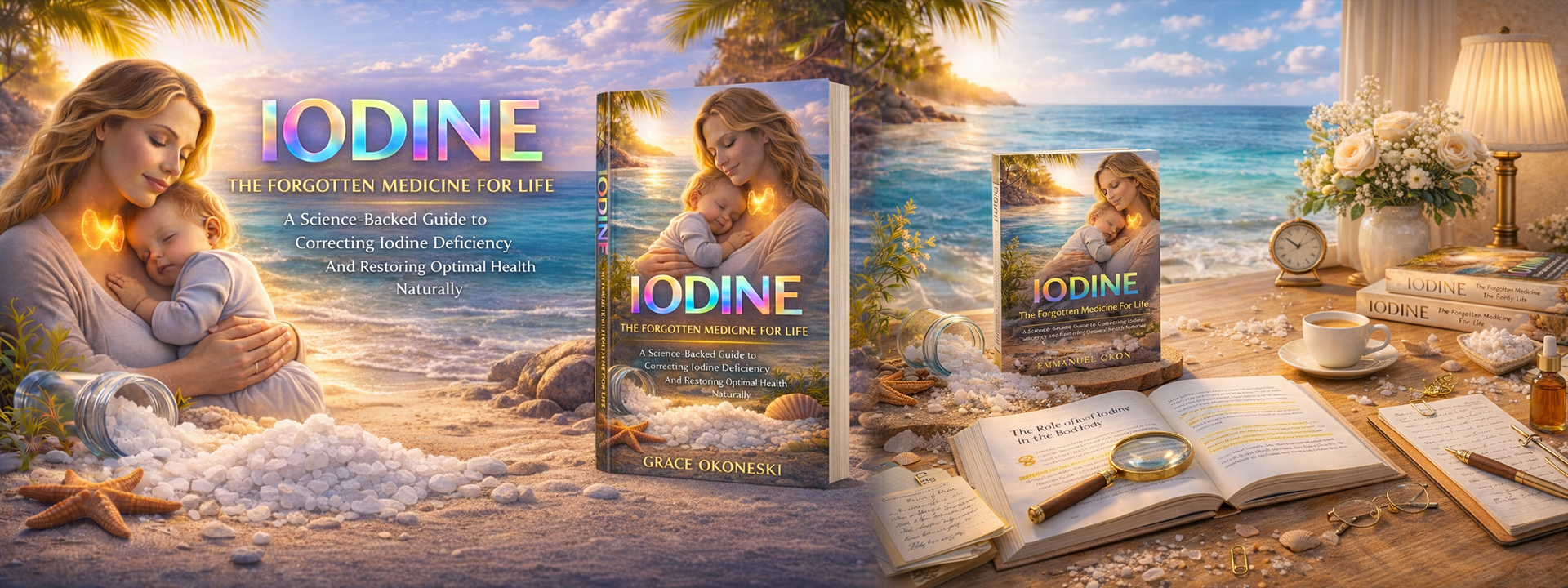
Is Your Body Getting Enough of This Essential Mineral?
Explore the surprising ways iodine contributes to healthy metabolism, mental clarity, and vitality, plus tips for optimizing your intake. What your doctor might not have covered that could be ruining your life — revealed in this eye-opening book.
Dear Friend,
Let me begin by easing a concern you might already be feeling as you read this.
Your doctor didn’t fail you. They didn’t overlook something obvious, and they certainly weren’t negligent. The reason iodine is rarely discussed today has very little to do with ignorance and everything to do with how modern medicine is trained to prioritise urgency, efficiency, and population-wide solutions. Iodine, once one of the most discussed medical topics in history, became a victim of its own success. When a problem appears to be “solved,” the deeper story quietly fades into the background.
And iodine is perhaps the clearest example of this.
Modern medicine excels at treating acute illness. It is designed to act decisively when something is broken, infected, inflamed, or failing. But nutrition does not usually announce itself in emergencies. It works slowly, systemically, and quietly. When something is slightly off, it doesn’t trigger alarms. It whispers. And whispers are easy to ignore, especially when blood tests come back “normal” and no diagnosis can be named.
Many people don’t feel sick.
They simply don’t feel as well as they believe they should.
They wake up with less energy than they remember having. Their thinking feels a little duller than it once did. Stress seems harder to tolerate. Resilience feels thinner. Yet nothing appears wrong enough to pursue aggressively. Life continues, quietly suboptimal, and the deeper questions are never asked.
Discover the full story behind iodine and why it quietly left modern conversations
For thousands of years, iodine would not have been overlooked so easily.
Long before laboratories, nutritional charts, or medical specialisation existed, ancient societies noticed patterns that repeated themselves across continents and centuries. Communities living near the sea often appeared healthier, more robust, and more resilient than those living inland. Growth patterns differed. Cognitive development differed. Certain visible conditions appeared frequently in some regions and rarely in others. Early healers did not understand biochemistry, but they understood observation, and what they observed was consistent.
In ancient China, as early as 3600 BCE, healers burned seaweed and sea sponges into ash and used them for swollen neck conditions. In ancient Greece, Hippocrates documented the use of marine substances for similar concerns. Mesopotamian clay tablets reference marine ash. Indigenous cultures preserved oral traditions linking sea-derived materials with balance and vitality. These practices were not symbolic rituals. They were responses to real, observable outcomes.
Something from the sea mattered.
It wasn’t until the early nineteenth century that science finally caught up with what history already knew. In 1811, French chemist Bernard Courtois isolated iodine while processing seaweed ash, observing the distinctive violet vapour that would give the element its name. Within decades, iodine became one of the most discussed substances in medical literature. Physicians debated its uses. Chemists studied its properties. Surgeons applied it as an antiseptic. Lugol’s solution entered mainstream practice.
Iodine was not fringe in medicine.
It was foundational.
By the early twentieth century, iodine deficiency was recognised as one of the most significant public-health challenges in the world. Entire regions suffered from goitre, impaired development, and cognitive delays. Then came one of the most elegant public-health interventions ever implemented: salt iodisation.
It worked.
Within a generation, visible iodine deficiency disorders declined dramatically. Goitre rates fell. Population-level cognitive outcomes improved. From a public-health perspective, this was a triumph. And rightly so.
But something subtle happened alongside that success.
Once iodine deficiency was considered “handled,” iodine itself quietly left the spotlight.
The book discusses published evidence on what can happen when iodine intake is too low in certain populations, the improvements to health when it is consumed at the right amount as well how to obtain or supplement the right amount and the right formulation for optimal health; because not all forms of iodine are equal or good for you.
Research from the World Health Organization and others indicates that inadequate iodine can contribute to challenges like impaired thyroid function, which supports metabolism, growth, and development. Studies have linked low iodine levels to potential issues such as goiter (thyroid enlargement), reduced cognitive performance in children (e.g., lower IQ scores in some deficient areas), and developmental delays.
Severe deficiencies during pregnancy have been associated with risks like miscarriage, stillbirth, birth defects, stunted growth, intellectual disabilities, and cretinism (a condition involving severe mental and physical impairments). In children, global data shows iodine deficiency as a leading cause of preventable intellectual impairment, with meta-analyses indicating potential losses of 10–13.5 IQ points in severely affected populations. In adults, low iodine may relate to hypothyroidism symptoms like tiredness, feeling cold, weight gain, and goiter.
Historical examples include high goiter prevalence (up to 70% in some US regions in the early 1900s) and endemic cretinism in areas like the Himalayas or Andes. The book covers these findings from epidemiological studies and meta-analyses to highlight why iodine nutrition remains a topic of ongoing global interest; always emphasizing that individual experiences vary widely and professional guidance is essential.
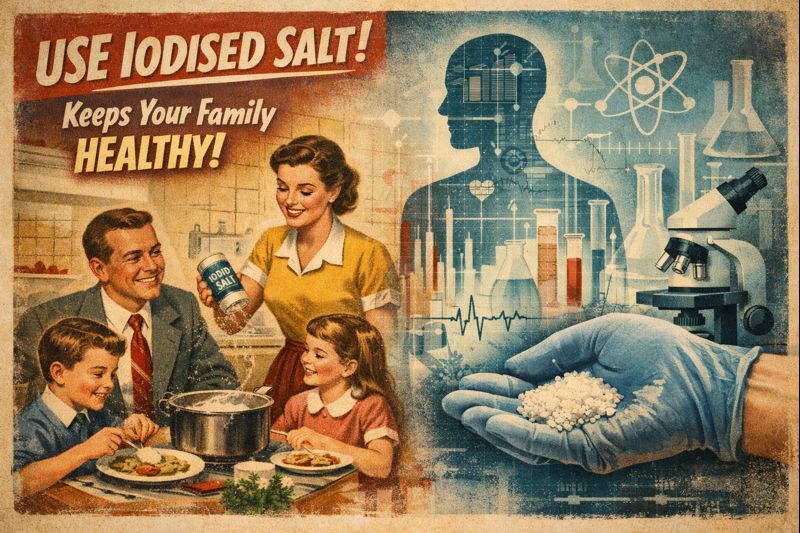
Today, most doctors are taught that severe iodine deficiency is rare, that iodised salt solved the problem, and that standard intake recommendations are sufficient for the majority of people. At the population level, that framework largely holds true. But population averages do not describe individuals. They do not account for changing diets, reduced salt consumption, processed food supply chains, soil depletion, environmental halogens, or the wide variation in how different bodies absorb and utilise nutrients.
As a result, iodine exists in an unusual medical grey zone.
Universally acknowledged as essential, yet rarely explored in depth.
Too important to dismiss.
Too “solved” to revisit.
And when something is no longer revisited, people assume there is nothing more to understand.
This creates blind spots.
Discover the full story behind iodine and why it quietly left modern conversations
My name is Grace Okoneski. I am an independent health researcher and free thinker based out of Melbourne, Australia, and like many people, I spent years feeling consistently below my best without any clear explanation. Routine tests were normal. Advice was generic. Nothing appeared wrong on paper. Yet something felt missing.
That question led me into a deep, multi-year exploration of iodine’s history, biochemistry, public-health role, and ongoing scientific debate. I studied ancient medical texts, WHO and NIH data, NHANES surveys, Japanese dietary patterns, and the work of researchers who continued asking questions long after iodine left mainstream discussion.
What I discovered was something really unsettling.
It was a missing piece that has been completely ignored.
A story that had been shortened, simplified, and quietly forgotten.
About the Author


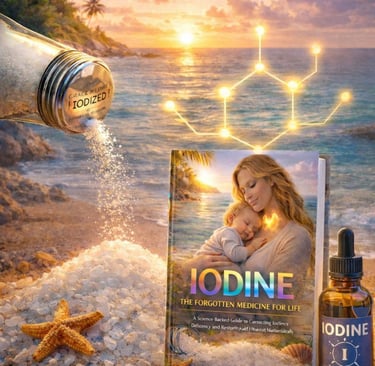
“Iodine: The Forgotten Medicine For Life” is my attempt to restore that missing context. It is a great volume of educational guide that brings together history, science, and modern discussion into one coherent narrative. It gives you something far more valuable.
Understanding.
The book explores why iodine mattered so profoundly in ancient medicine, how it shaped modern public-health policy, and why scientists continue to study its role beyond the narrow definitions most people are taught today. It examines environmental and dietary changes, competing halogens, and the difference between preventing severe deficiency and truly understanding sufficiency.
This book is for thoughtful readers. For those who value evidence over hype, context over slogans, and education over quick fixes. For people who sense that some of the most important health knowledge hasn’t been lost — only compressed.
The greatest gap in modern health is not a missing supplement or a hidden cure.
It is missing understanding. And some of the most important stories are not hidden from us. They are simply no longer told in full.
This book exists to change that.
Obtain a copy of the book for yourself and your family and get access to this transformational information — presented clearly, responsibly, and grounded in history and science so you can make informed decisions about your health and nutrition with confidence. This is especially helpful in today's world.
Your Order Is Protected From the Moment You Say Yes
At this point, it’s natural to pause and ask yourself a simple question.
That’s a fair question. And it deserves a clear answer.
Your purchase of Iodine: The Forgotten Medicine for Life is securely processed by ClickBank, one of the most established and trusted online payment platforms in the world.
And every ClickBank order comes with a full 60-day money-back guarantee.
That means you are never locked into this decision.
What happens if I decide this isn’t for me?
Once you place your order, you’ll receive immediate access to the book.
From there, you can take your time.
Read through the material carefully.
Review the historical sources.
Consider the scientific context presented.
If, at any point within 60 days, you feel the book did not meet your expectations or simply wasn’t right for you, you have two easy options.
You may contact me directly, and I’ll personally make sure your refund is handled promptly.
Or, if you prefer, you can contact ClickBank support directly, and they will process a full refund on your behalf.
No pressure.
No awkward conversations.
No questions asked.
Here’s How It Works
Because this book is not about making promises. It’s about offering perspective. You are not being asked to believe anything blindly. You are being invited to read, reflect, and decide for yourself. That’s why the risk stays with me — not with you. Take the Time You Need
You have a full 60 days to evaluate the book in your own space, on your own terms.
If it adds value to your understanding, keep it.
If it doesn’t, simply request your refund and move on with clarity and peace of mind.
Either way, you are protected.
I believe informed people make the best decisions. This guarantee exists so you can evaluate the material with clarity and confidence, knowing the risk stays with me.
Why This Guarantee Exists
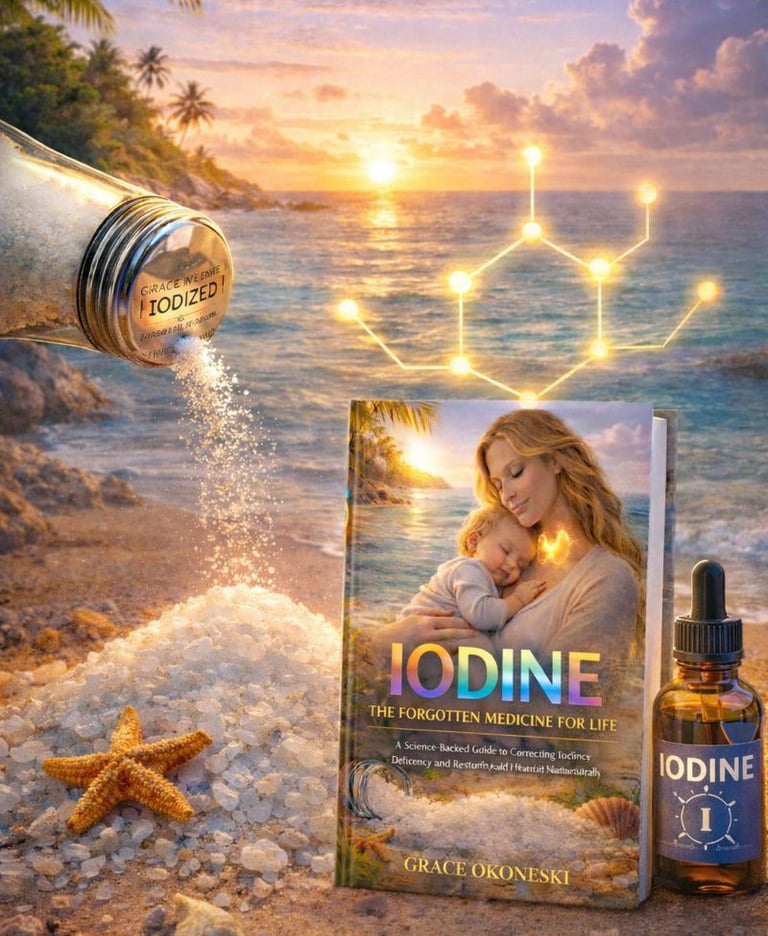
Start exploring the full iodine story today